
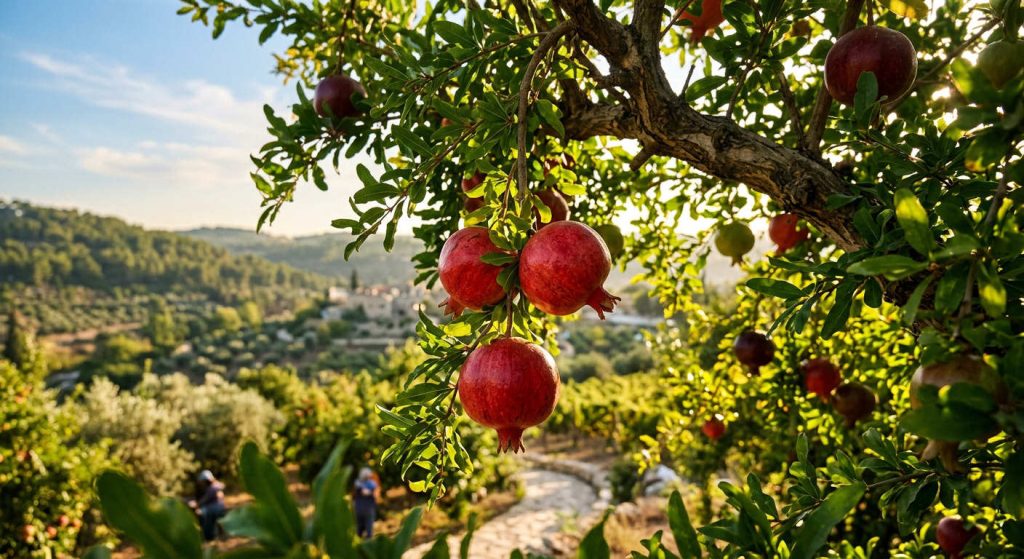
From the Garden of Eden to the Fields of Israel: A Special Report on the Biblical Roots of Food, Fellowship, and Faith
Hello, Friends,
What is more basic than food? As supporters of Leket Israel, we know that a meal is more than just sustenance; it’s a source of dignity, community, and hope. In a recent conversation with biblical scholar Dr Peter Shir, we were reminded of a profound truth: God’s grand story in the Bible begins with food.
From the first command in the Garden of Eden to the intricate worship at the Temple, and from the teachings of Jesus to the mission of the early church, how we view and handle food has always been a key aspect of with God. This special report is a deeper dive into our shared Judeo-Christian heritage, exploring the timeless biblical principles that animate our work in Israel today. Join us as we uncover how every rescued fruit and vegetable is part of a story that started in the very beginning.
God's First Commandment: The Pattern of Provision
In Genesis, God’s first instruction to humanity was a food law. He provided an abundance of every good tree for Adam and Eve but set apart one—the Tree of the Knowledge of Good and Evil—as His own. This wasn’t about deprivation; it was a test of trust and relationship. It established a holy pattern that echoes through the entire Bible:
- God’s Holy Portion: Food reserved exclusively for Him (The Forbidden Tree, the Burnt Offering in the Temple).
- The Servant’s Portion: Food set aside for His ministers (The Priests’ share of the sacrifices).
- The People’s Portion: The abundance He provides for His children to enjoy in fellowship with Him (The Garden’s trees, the shared Peace Offering).
This teaches us a foundational lesson: God is the ultimate owner and provider. Acknowledging this truth is the beginning of worship.
A Word from a Jewish Scholar: The great Rabbi Lord Jonathan Sacks taught that the Hebrew word for sacrifice, korban, means “to draw near.” The offerings, especially the shared meals, were a way for Israel to draw near to God, acknowledging Him as the source of all their blessings.
Clean vs. Kosher: A Daily Lesson in Holiness

The food laws in Leviticus can be confusing. Are they about health? Hygiene? As Dr Shir explained, they are primarily about holiness. God created categories of “clean” and “unclean” animals to serve as a constant, daily reminder for Israel that they were a people set apart for Him. Every meal was an opportunity to remember their unique covenant.
The Jewish system of kashrut (keeping kosher) is the beautiful, time-honored application of these biblical principles. It takes the what (biblically clean animals) and adds the how (humane slaughter, removal of blood, separation of meat and dairy).
- Biblical “Clean”: A spiritual category defined by God in the Torah to teach separation and holiness.
- Rabbinic “Kosher”: The practical, detailed system of how to apply those principles, turning the physical act of eating into a sacred discipline.
This is similar to how the Sabbath is God’s separating time, six days for us, one day for Him.
For us as Christians, this history helps us appreciate the deep roots of our own faith’s call to be “in the world, but not of it.”
A Word from a Jewish Scholar: Rabbi Abraham Joshua Heschel wrote powerfully about sanctifying the mundane. He described practices like kashrut not as restrictions, but as a way to “experience the sacred in the ordinary,” elevating a simple meal into an act of awareness of God.
Jesus and the True Source of Purity
In Mark 7, when the Pharisees challenge Jesus’s disciples for eating bread with unwashed hands, Jesus makes a revolutionary point. He wasn’t canceling the food laws of Leviticus; He was correcting a human tradition that had superceded God’s commands.
The Pharisees, in their devout desire to follow God, had created a system of extra biblical rules to define what is clean and unclean. Jesus corrected them telling them to focus on what is in their heart, not on what is on their hands. Many Christians have sadly seen episodes like this as Jesus rebuking the Pharisees but it is important to remember that Jesus spent so much time arguing with the Pharisees, because He was so close to them. This is what we see in Mark chapter 7.
A Word from a Jewish Scholar: Dr. Amy-Jill Levine, a Jewish New Testament scholar, notes that the Pharisees were devout laypeople seeking to live a life of holiness. Jesus’s debate with them was not a rejection of their piety, but an “intra-Jewish” conversation about the best way to honor God and prioritize His commands.
Peter’s Vision: A Table Open to All Nations
The vision of the unclean animals in Acts 10 is a pivotal moment. But as Dr Shir reminds us, the vision wasn’t really about food—it was about people. God used the powerful metaphor of unclean animals to show Peter that Gentiles too can be part of the family of God. The true meaning is revealed when Peter says, “God has shown me that I should not call any person common or unclean” (Acts 10:28).
Christians have interpreted Peter’s vision as God abolishing His dietary laws which by this point in time had been observed for fifteen centuries. But if this were the case, Peter would have told the Jewish leaders in Jerusalem that the kosher laws were abolished. But that is not the opposition Peter faced.
In Acts 11:3 the Jewish leaders say, “You went in to uncircumcised men and ate with them!”
The issue was they saw Cornelius, as a Gentile, as spiritually unclean.
Peter’s vision meant that no Gentile who fears God was spiritually unclean. Hence why their response was not about changing their diets but their attitude to Gentiles who feared God. In Acts 11:18 we read,
“When they heard these things they became silent; and they glorified God, saying, ‘Then God has also granted to the Gentiles repentance to life.'”
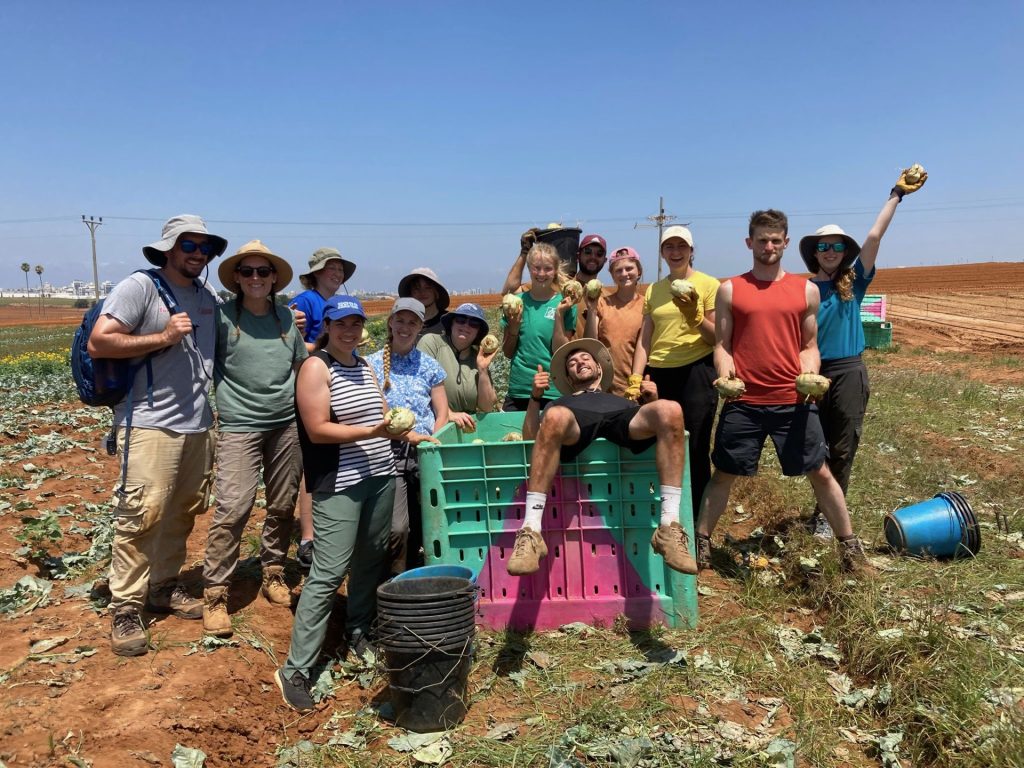
From Ancient Gleaning to Modern Hands: Our Shared Mandate
The biblical principles of food reveal a God who provides in abundance, calls His people to live in holiness, and desires fellowship with them. One of the most beautiful expressions of this is the gleaning law (which is “leket” in Hebrew) found in Leviticus 19:9,
“Now when you reap the harvest of your land, you shall not reap to the very edges of your field, nor shall you gather the gleanings [leket] of your harvest”
This wasn’t a mere suggestion; it was God’s welfare system, built on dignity and a recognition that the land—and all its produce—ultimately belongs to Him. If you want to find out more about gleaning and dignity, read the book of Ruth! Leket is the commandment Boaz followed when he allowed Ruth to glean from his field.
This is the very heartbeat of Leket Israel.
Today, instead of leaving just the gleanings of a field, modern agriculture leaves tons of perfectly nutritious surplus produce. Leket Israel steps into the gap, organizing tens of thousands of volunteers to glean these modern-day fields and rescue surplus cooked meals. We act as the hands and feet that gather God’s abundance and bring it, with dignity and love, to the tables of the poor, the stranger, and the needy throughout the Holy Land.
By supporting Leket Israel, you are not just funding a food bank. You are participating in the fulfillment of a timeless, biblical mandate. You are helping to write the next chapter in God’s great story of provision.