

This month, the month of Elul involves introspection for the High Holy Days (such as Rosh Hashsana). For this month we want to take you on a devotional journey through the Book of Ruth from Christian Friends of Leket Israel.
Somewhere this morning, a woman poured her second cup of coffee in a quiet kitchen and thought, this is not the life I prayed for.
Maybe the house got quiet too fast. Maybe there’s a chair at the table nobody sits in anymore. Or maybe it’s the retirement that was supposed to feel like freedom and mostly feels like fog.
Nobody stands up in Bible study and says this out loud. But plenty of us have thought it: God, I served You. I prayed. I showed up. And this is how the story goes?
If that’s you, I want you to meet a woman who said it out loud. In front of her whole town.
The woman who renamed herself

Her name was Naomi, which means “pleasant.” She had a husband, two sons, and a home in Bethlehem. Then famine drove the family to Moab, and in that foreign country she buried her husband. Then she buried one son. Then she buried the other.
Read that again slowly. Three graves in a land that was never supposed to be home.
When Naomi finally walked back into Bethlehem, older and emptier, with nothing to show for ten years except a Moabite daughter-in-law, her old friends hardly recognized her. “Is this Naomi?” they asked. Listen to her answer:
“Do not call me Naomi; call me Mara, for the Almighty has dealt very bitterly with me. I went out full, and the Lord has brought me home again empty.” (Ruth 1:20-21)
Mara is Hebrew for “bitter.” This grieving woman stood in the town square and changed her own name to Bitter. That’s not a lady backsliding. That’s a lady telling the truth about her pain, right to God’s face.
And here’s what I need you to see, because it will set somebody free today: God did not strike her down for saying it. There’s no lightning bolt in chapter one. No angel shows up to scold her. Heaven could handle Naomi’s honesty. Heaven can handle yours.
But God did one more thing, and I love Him for it. He heard her rename herself Bitter, and He never once called her that. Go look; I’ll wait. From that verse to the end of the book, Scripture keeps right on calling her Naomi. Pleasant. Her real name.
You can feel bitter, friend. You just can’t let bitter become your name. Bitter is not your name.
What the rabbis saw in this little book
Here’s something most of us never heard in Sunday school. The Jewish people have treasured the Book of Ruth for well over two thousand years. They still read it aloud in the synagogue every year at Shavuot, the harvest festival we know as Pentecost.
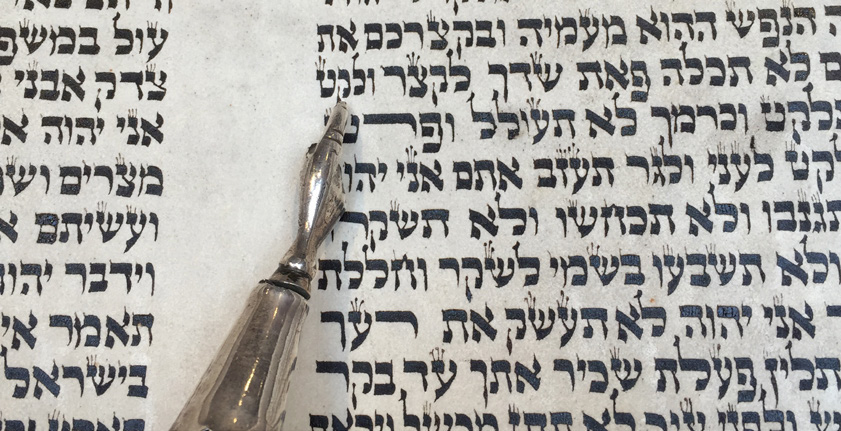
And the ancient rabbis asked a wonderful question about it. In the midrash (the old rabbinic commentary on Scripture), Rabbi Ze’ira points out that Ruth is a strange book to find in the Bible at all. There’s not a single law in it. No miracles. Nobody hears a voice from heaven. So why was it written?
His answer: to teach how great is the reward of chesed.
Say it “CHEH-sed,” with a little gravel in the back of your throat. Your English Bible translates it “lovingkindness,” but it’s bigger than that. Chesed is love that stays when it has every reason to leave. Love with its work boots on.
Naomi told God exactly how empty she was, and God answered her. Not with a lecture. With chesed He had already packed for the journey: a daughter-in-law named Ruth who refused to leave her side, a barley harvest just beginning as they walked through the gate, and a farmer named Boaz she hadn’t met yet.
When you’re too empty to hold on to God, God has a habit of sending someone to hold on to you.
The bitterness broke. The story didn’t.
Now flip to the last page of this little book. The same town women who heard Naomi rename herself Bitter are gathered around her again, except this time there’s a baby on her lap. Her grandson Obed, born to Ruth and Boaz. And the women say to her, “Blessed be the Lord… may he be to you a restorer of life and a nourisher of your old age” (Ruth 4:14-15).
The woman who came home empty is holding her grandson. Obed became the father of Jesse. Jesse became the father of David. And from David’s line, a thousand years later, in that same little town of Bethlehem, came the Messiah.
Use your holy imagination with me for a minute. Suppose you could have told Naomi, on that worst morning in Moab with three graves at her back, that her emptiness was the very road God would use to bring King David into the world. And then Jesus. She couldn’t have believed you. She wasn’t at the end of her story. She was in the messy middle of it.
So are you, dear one. Bitter is a chapter. It is not the book. Bitter is not your name.
Chesed still has its work boots on
One more thing, because it’s close to our heart at Christian Friends of Leket Israel.
What actually fed Naomi and Ruth while God was redeeming their story? A commandment. God told Israel’s farmers to leave the dropped and forgotten grain in the fields so the widow and the stranger could gather it with dignity (Leviticus 19:9-10). The Hebrew word for those gleanings is leket. It’s the reason two hungry widows didn’t starve while their miracle was still on the way.

That commandment never expired. Today Leket Israel, the National Food Bank, gleans surplus produce from hundreds of Israeli farms, millions of pounds of it a year, and delivers it to widows, Holocaust survivors, and struggling families across the land. Same fields. Same chesed. Trucks instead of baskets. When Christians help make that happen, we’re standing right where Boaz stood.
Something to ponder
Naomi told God the truth about her bitterness and stayed in the story. Is there something you’ve been afraid to say to Him honestly? What would it look like to hand Him your “Mara” this week, and let Him keep calling you by your real name?
A prayer for today
“Father, I’ve had some Mara days, and You know every one of them. Thank You that You could handle Naomi’s honesty, and You can handle mine. I give You my bitterness before it becomes my name. Open my eyes to the chesed You’ve already put around me, and make me somebody’s Ruth. In Jesus’ name, amen.”
Want to walk the fields of Ruth with us? Download our free booklet, Ruth: An Ancient Gentile Woman Has a Critical Message for the Church Today, and watch for the next devotional in this series: the daughter-in-law who wouldn’t leave, and the words so faithful the rabbis still study them today.