
A High Holy Days journey through the Book of Ruth · Part Two
Last time I left you on the road to Bethlehem with an old Hasidic saying: during Elul, the King is in the field. Here’s the rest of that teaching. Most of the year, the rabbis said, a king lives behind palace walls. You need an appointment, the right clothes, and somebody to vouch for you. But once a year the king rides out to the countryside, and out there any farmer in his work clothes can walk up and speak with him, and the king receives every one of them with a smiling face. That’s Elul, they taught. The month God makes Himself easy to find.
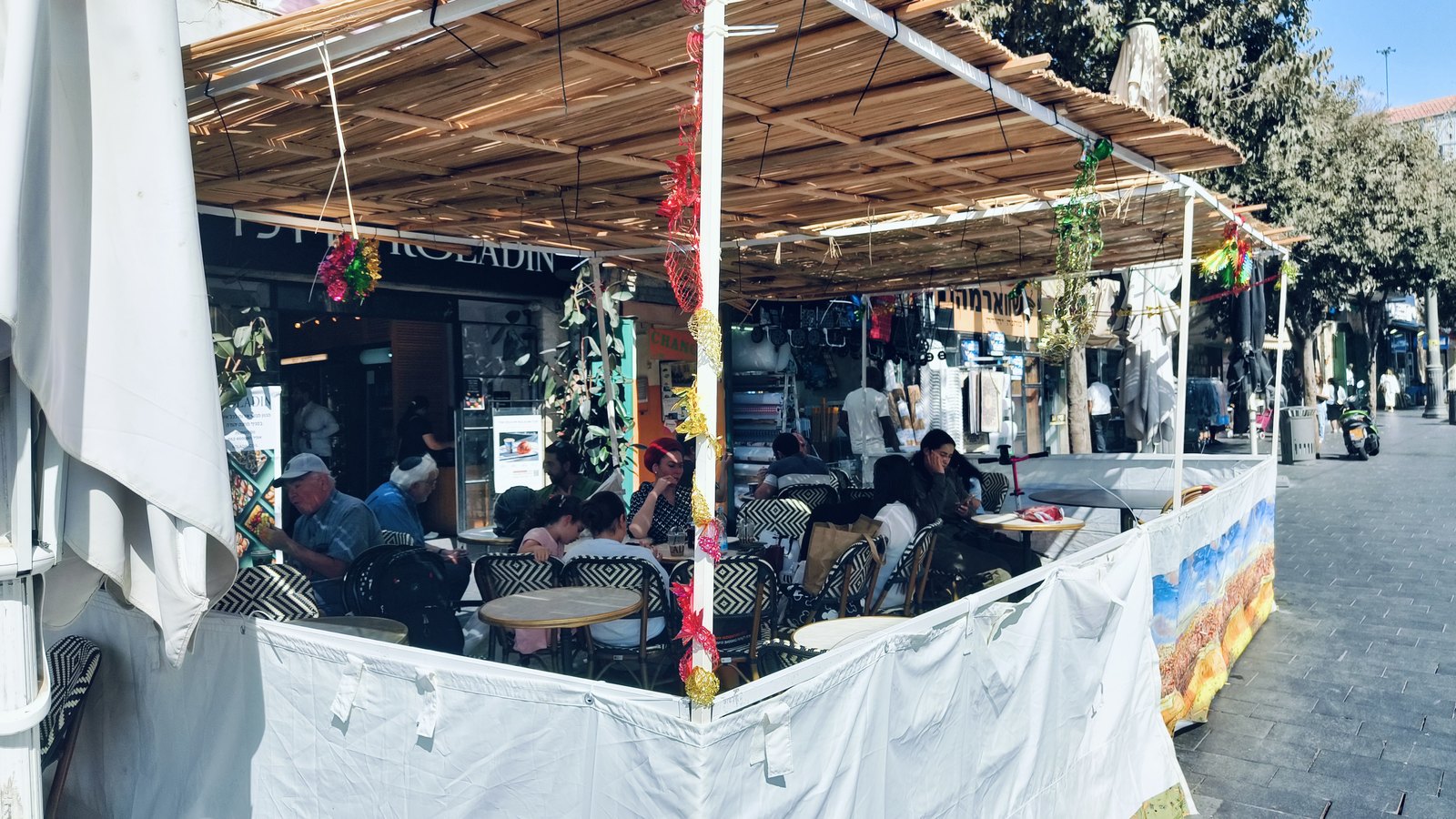
Then Rosh Hashanah comes, the shofar sounds, and the King goes back to His palace to take His throne. By the time you read this, that has happened. On the Jewish calendar these are the days between the New Year and Yom Kippur, the Day of Atonement, and the rabbis call them the Days of Awe. Five days after Yom Kippur comes Sukkot (soo-KOTE), the harvest festival. Moses called it the Feast of Ingathering (Exodus 23:16). For a whole week, families all over Israel eat their meals outdoors in a sukkah (soo-KAH), a hut with a roof of branches loose enough to see the stars through, to remember the forty years God sheltered and fed His people in the wilderness.
And here’s the part I need you to see. When God told Israel how to keep that harvest feast, He wrote out the guest list Himself: “you and your son and your daughter, your male servant and your female servant and the Levite, the stranger and the fatherless and the widow, who are within your gates” (Deuteronomy 16:14). The stranger and the widow were on God’s guest list for the harvest party before there was a harvest.
Ruth was both. And in chapter two, she gets invited to lunch.
Somewhere this morning, a woman is doing the hardest thing a proud woman ever does. She’s asking for help.
Maybe she’s in line at the church food pantry for the first time, praying nobody from her Sunday school class drives by. Maybe she’s on the phone with a grown son, working up to the sentence that starts, “I hate to ask, but.” Or maybe she just walked into a new church by herself and is hovering near the coffee table, trying to look like she belongs.
Ruth knew that feeling. In chapter two she goes to work in a stranger’s field, in a town where everybody knows exactly who she is, and asks permission to pick up what the harvesters dropped.
She went out
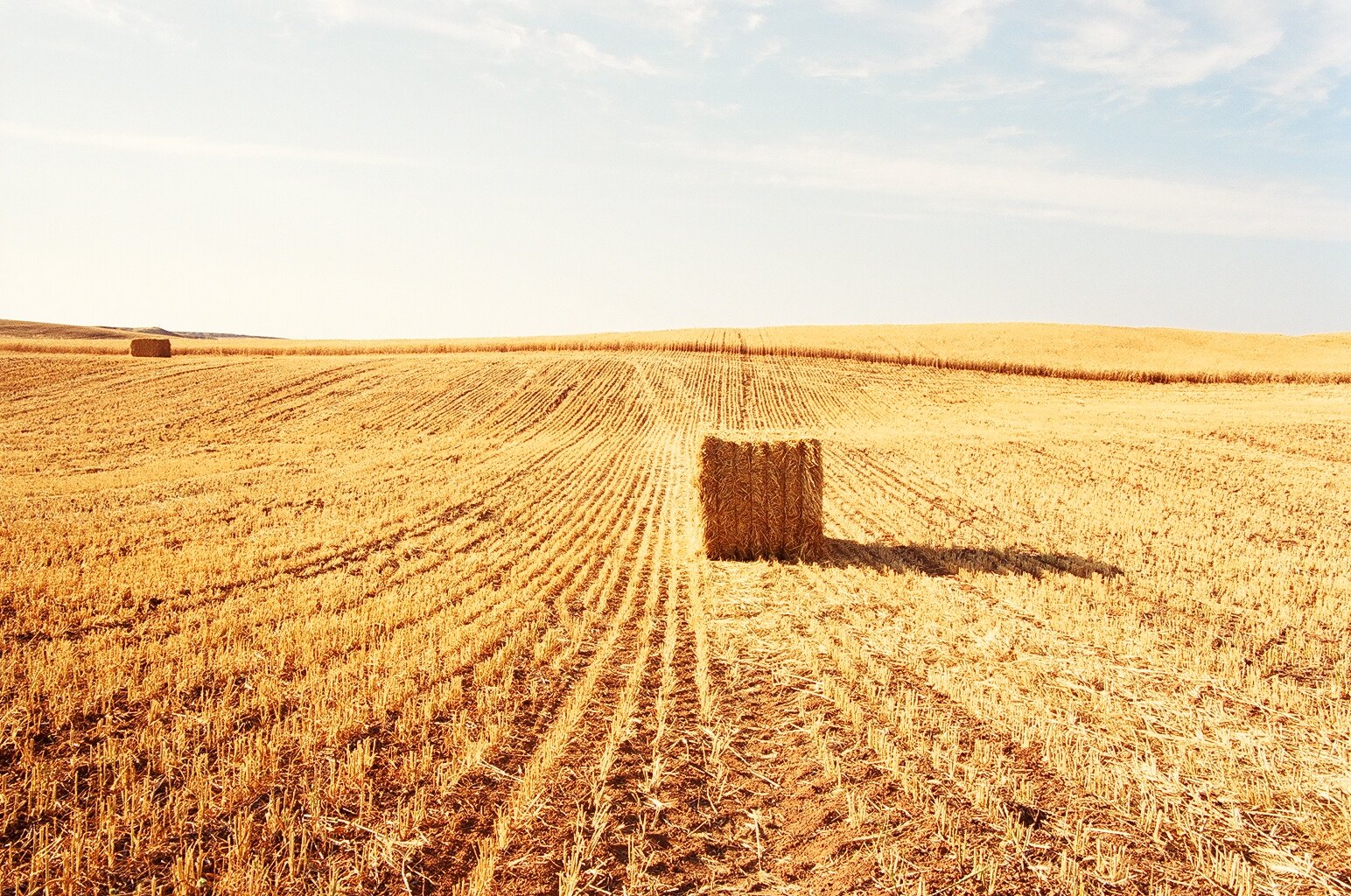
Chapter one ended with two widows arriving in Bethlehem “at the beginning of barley harvest” (1:22). Chapter two opens with two hungry women. Naomi, still calling herself Mara, has no plan. Ruth does.
“Please let me go to the field, and glean heads of grain after him in whose sight I may find favor,” she says, and Naomi answers, “Go, my daughter” (2:2).
Notice who moves first. The girl from Moab didn’t wait for a miracle, and she didn’t wait for the town to warm up to her. She got up and went to work in the one place God had already promised a widow could eat. Remember Leviticus 19 from last time? The farmers of Israel were commanded to leave the corners of their fields and the fallen stalks “for the poor and the stranger” (Leviticus 19:9–10). Those fallen stalks are leket (LEH-ket), and the rabbis were particular about them. If one or two stalks slipped from the reaper’s hand, they belonged to the poor the moment they hit the ground. Three or more, and the farmer could keep them. So a widow with a sharp eye and a strong back could feed herself, and it wasn’t charity. It was her portion, written into the Law of Moses centuries before she was born.
Ruth didn’t know any of that when she left Moab. She was about to find out that God had been setting her table for a very long time.
Then comes my favorite verse in the chapter: “she happened to come to the part of the field belonging to Boaz, who was of the family of Elimelech” (2:3). In Hebrew the storyteller all but winks at you. The phrase is vayiker mikreha (vah-yee-KER mik-REH-hah), literally “her chance chanced.” Of all the fields around Bethlehem, on her first morning, in a town where she didn’t know a soul, the Moabite widow wandered into the one field that belonged to her dead father-in-law’s relative. That’s not luck, honey. That’s a divine appointment wearing luck’s clothes.
And what a relative. Scripture introduces him as “a man of great wealth” (2:1), but the Hebrew is ish gibbor chayil (eesh ghee-BOR KHAH-yil), a mighty man of valor, the same words the Bible uses for Gideon and for David’s warriors. Remember that word, chayil. Last time we learned that before this story ends, Boaz will call Ruth an eshet chayil, a woman of valor, the only flesh-and-blood woman in the Bible to be called one. The woman of valor has just walked into the field of the man of valor, and neither of them knows it yet.
The owner walks into the field
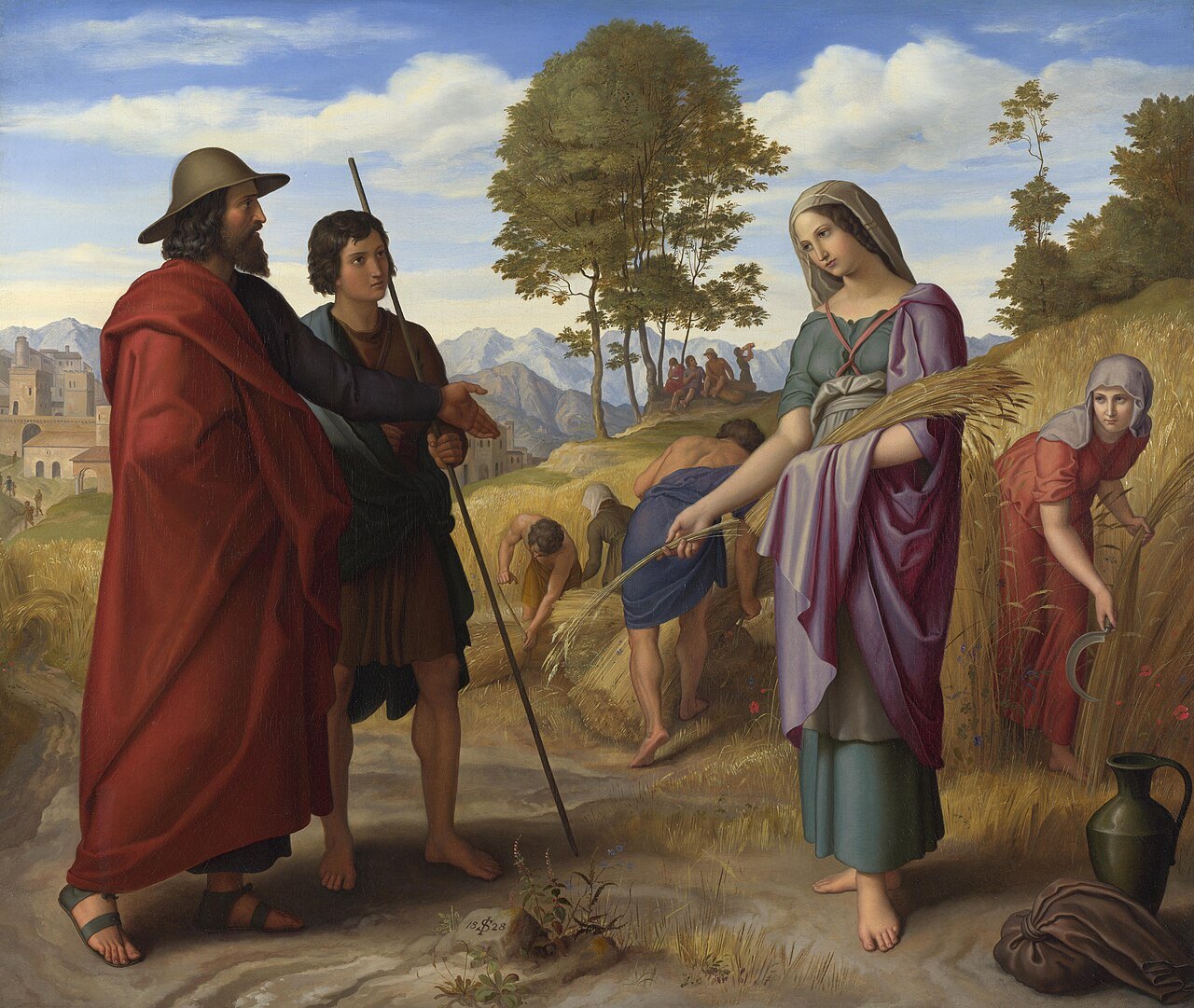
“Now behold, Boaz came from Bethlehem, and said to the reapers, ‘The LORD be with you!’ And they answered him, ‘The LORD bless you!’” (2:4).
Ladies, if your church says “The Lord be with you” and answers “And also with you,” this is where it comes from. It comes from a barley field, from a farmer greeting his hired hands. The rabbis point to this verse as the origin of greeting your neighbor with the name of God (Mishnah Berakhot 9:5), and some say Boaz himself started the custom. That tells you what kind of man owns this field. A man who blesses his workers by name is the kind of man who notices the stranger at the edge.
And he does. “Whose young woman is this?” he asks his foreman (2:5). The Talmud (Shabbat 113b) wonders what made him look twice, and its answer is her manners. She picked up two fallen stalks and left three lying, because she had learned the law. She gathered the standing grain standing and sat down to gather the fallen grain, rather than bend over in front of the young men. In a field full of strangers, this foreign girl was keeping God’s rules more carefully than the locals. The foreman adds one more detail: she asked permission first, and she has been at it since morning with hardly a break (2:7). She asked for what God had already given her. There’s a lesson in that for the proud among us, and I’m counting myself.
Then Boaz speaks to her, and listen to how he does it. “My daughter,” he calls her. Stay in my field. Stay close to my young women. I have told the young men not to lay a hand on you. When you’re thirsty, drink from the water they’ve drawn (2:8–9). Read that last one again. In that world, drawing water was women’s work and foreigners’ work. Joshua made the Gibeonites Israel’s water carriers (Joshua 9:27). Here the Israelite men draw the water and the foreign woman drinks it. Boaz just turned the whole order upside down for her.
Ruth falls on her face. “Why have I found favor in your eyes, that you should take notice of me, since I am a foreigner?” (2:10). Even her question has a pun in it. “Take notice of me” is l’hakireni, and “foreigner” is nochriyah, two words from the same root. Why would you recognize the unrecognized one? Why would you see the girl nobody sees?
Boaz’s answer should sound familiar. “It has been fully reported to me, all that you have done for your mother-in-law since the death of your husband, and how you have left your father and your mother and the land of your birth, and have come to a people whom you did not know before” (2:11).
Your father and your mother. The land of your birth. A people you did not know. That’s Genesis 12. That’s what God said to Abraham: “Get out of your country, from your family and from your father’s house, to a land that I will show you” (Genesis 12:1). Boaz is telling this Moabite widow that she has walked Abraham’s road. Abraham left Ur on the strength of a promise. Ruth left Moab with no promise at all, only a mother-in-law and a God she had decided to trust.
“The LORD repay your work, and a full reward be given you by the LORD God of Israel, under whose wings you have come for refuge.”Ruth 2:12
Wings. The Hebrew word is kanaph (kah-NAHF), and your Bible saves it for its tenderest moments. “He shall cover you with His feathers, and under His wings you shall take refuge” (Psalm 91:4). “The Sun of Righteousness shall arise with healing in His wings” (Malachi 4:2). And a thousand years later, on a hillside outside Jerusalem: “how often I wanted to gather your children together, as a hen gathers her chicks under her wings” (Matthew 23:37). Boaz looked at a refugee in a borrowed field and told her she was already under the wings of God.
Keep that word in your pocket. Ruth is going to hand it right back to Boaz in chapter three, and it will change everything.
Come and eat
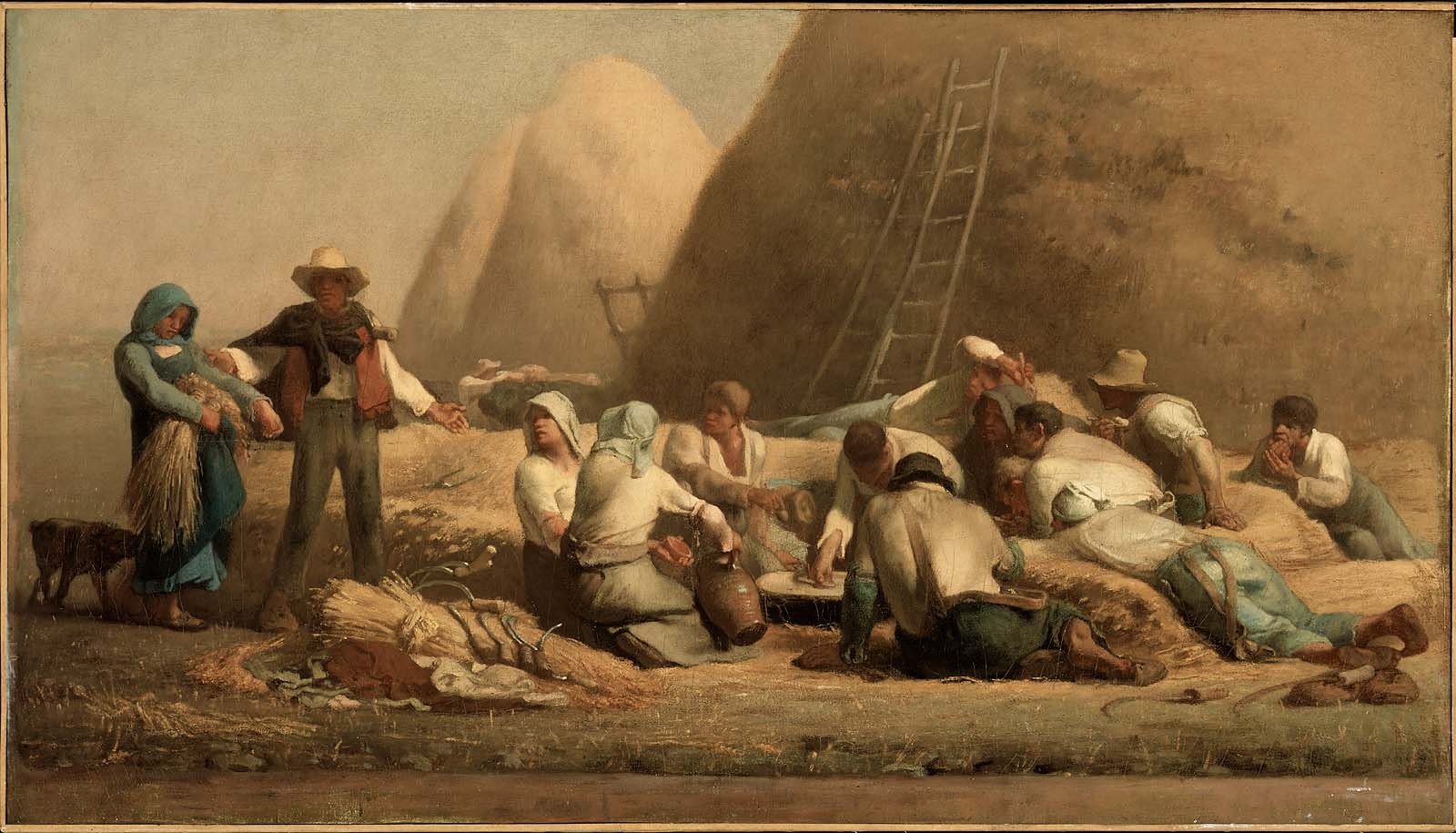
“Now Boaz said to her at mealtime, ‘Come here, and eat of the bread, and dip your piece of bread in the vinegar.’ So she sat beside the reapers, and he passed parched grain to her; and she ate and was satisfied, and kept some back” (2:14).
The gleaner is at the owner’s table. The woman who came for leftovers is being served by the man who owns the field. And here is one of those things I promised you would never hear in Sunday school. The old rabbinic commentary on this book, Ruth Rabbah, reads this lunch as a picture of the Messiah. “Come here” means draw near to the throne. “Eat of the bread” is the bread of kingship. And “dip your piece of bread in the vinegar,” the rabbis say, speaks of His sufferings, “as it is written, ‘He was wounded for our transgressions’” (Isaiah 53:5). An ancient Jewish commentary on a farm lunch in Bethlehem, quoting Isaiah 53 about a suffering King. I can’t read that without getting chills.
Notice, too, what Ruth does with the meal. She eats until she’s satisfied, and then she keeps some back. That evening she walks home and hands Naomi the leftovers from her lunch (2:18). A young widow with a full plate for the first time in who knows how long, wrapping up part of it for the old woman who told the whole town she had come home empty. That’s chesed (CHEH-sed) with its work boots on. And don’t miss the shape of it: leftovers, carried to someone hungry. Hold that thought.
Then Boaz does something the law never asked of him. “Let her glean even among the sheaves, and do not reproach her. Also let grain from the bundles fall purposely for her; leave it that she may glean, and do not rebuke her” (2:15–16).
Our little Ruth booklet makes a point here that I want to be careful with. What fed Ruth and Naomi was not, first of all, Boaz’s big heart. It was God’s law. The corners and the fallen stalks were never the farmer’s to give, because God had already given them. Boaz simply obeyed. But then he went further than the law. He told his men to pull handfuls out of the bound sheaves and drop them on purpose, and then to keep their mouths shut about it. Don’t reproach her. Don’t embarrass her. Let her think she’s the best gleaner in Judah. He gave to her in a way that let her keep her dignity, and I’d argue that’s the only kind of giving worth the name.
By evening she had threshed out “about an ephah of barley” (2:17), somewhere near thirty pounds. Close to two weeks of bread for two women, from one day in a field she wandered into by “chance.”
And when Naomi sees it, something breaks loose in her. “Blessed be he of the LORD, who has not forsaken His kindness to the living and the dead!” (2:20). That’s chesed again, the same word, and it’s the first time since the funerals that the woman who renamed herself Bitter has blessed the Lord. Then she says the word that opens the door to the rest of the book: “This man is a relation of ours, one of our close relatives.” In Hebrew, one of our go’el (go-EL). Our redeemers. We’ll get there. For now, just notice what put the blessing back in Naomi’s mouth. Barley. Thirty pounds of it, from a field she was too heartsick to walk to herself.
The chapter closes quietly. Ruth “stayed close by the young women of Boaz, to glean until the end of barley harvest and wheat harvest” (2:23). Barley harvest begins at Passover, and wheat harvest ends at Shavuot. Seven weeks, the very weeks Israel counts off every spring. Seven weeks of getting up and going back to the same field. There’s no romance yet and no proposal, just a widow showing up every morning to gather what God had told the field to leave for her.
Whose field is it?
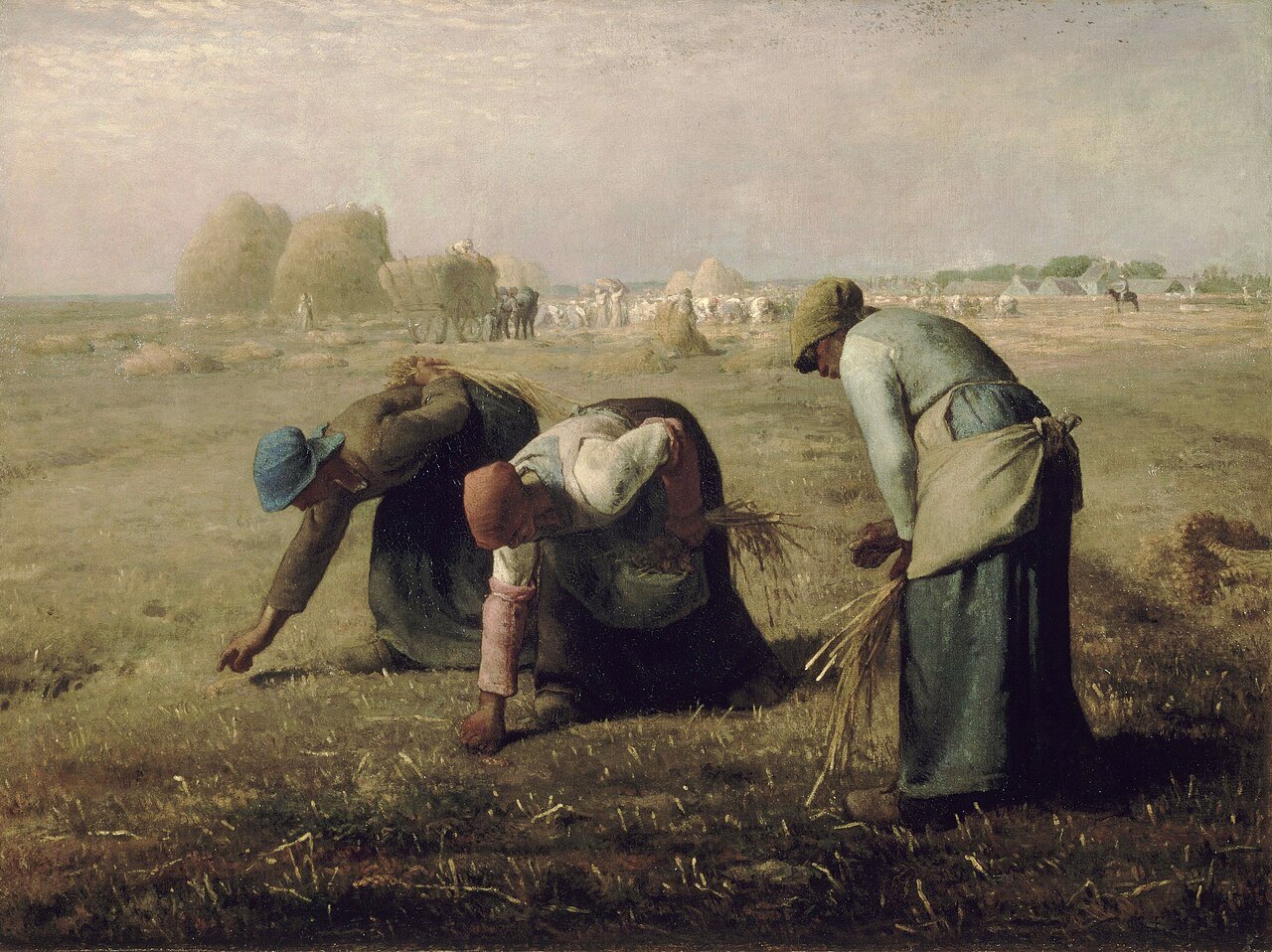
Go back to the gleaning law one more time and look at how it ends: “you shall leave them for the poor and the stranger: I am the LORD your God” (Leviticus 19:10). The farmer plowed the field, sowed it, and prayed for rain. And God says, the corners are Mine. The dropped stalks are Mine. I have already given them to the widow. Your job is to leave them alone.
That’s the whole theology of the Book of Ruth in one commandment. The field belongs to God. The harvest belongs to God. Boaz was a steward with a big heart, and it was still God’s barley.
Our booklet on Ruth says something that stopped me in my tracks: without leket, Jesus could never have been born. Follow the thread. No gleaning law, no bread for two widows. No bread, no reason for Ruth to be in that field. No field, no Boaz. No Boaz, no wedding, no Obed, no Jesse, no David. And no David means no city of David, no manger in Bethlehem, no Matthew chapter one. God fed King David’s great-grandmother, and the family line of the Messiah, with the leftovers of a barley harvest, and He did it through a farmer who kept the law and then some.
That commandment never expired. Today Leket Israel, the National Food Bank, does the same thing with trucks and warehouses instead of baskets. Volunteers go out to hundreds of Israeli farms and gather the produce that would otherwise be plowed under. Hotels, army kitchens, and company cafeterias hand over the cooked meals they didn’t serve. Last year that came to more than 74 million pounds of rescued food, delivered to around 470,000 Israelis in need every week: Holocaust survivors, widows, single mothers, and families who never imagined needing help. Leftovers, carried to the hungry. Sound familiar?
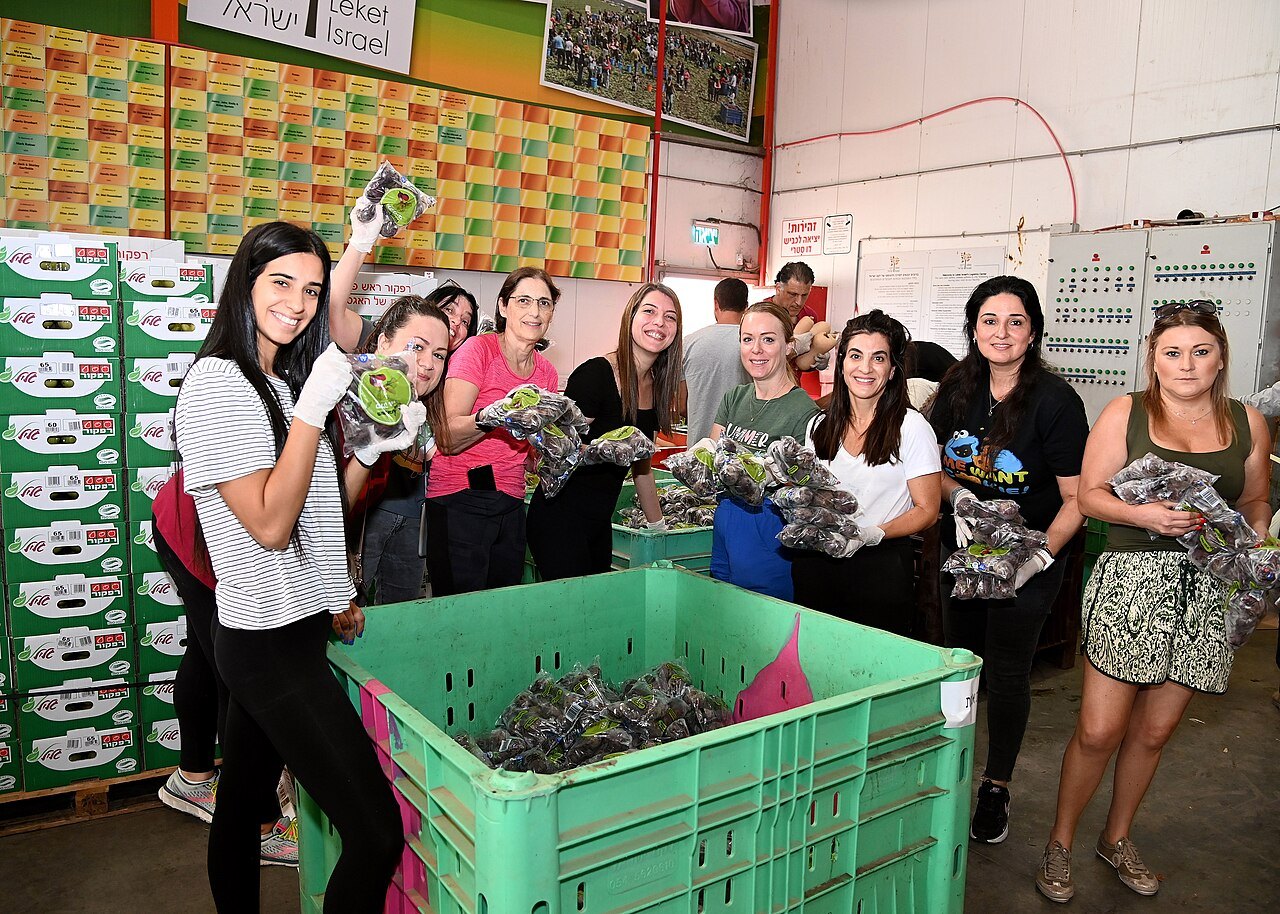
A retired man named Assaf, who gets his food from Leket, put it this way: “I cannot work anymore at my old age but I love the food from Leket. It is like eating in a restaurant. I am very appreciative.” That’s Boaz’s table, friend. “Come here, and eat of the bread.” And every fall, before the holidays, Leket’s volunteers pack holiday food boxes so that families with nothing can set a festive table like everybody else. God’s guest list, still being honored.
When Christians help make that happen, we aren’t doing charity, any more than Boaz was. We’re doing what the Owner of the field said to do, in the land where He said to do it. And He has kept every promise He ever made about what happens to the people who bless Israel.
Some of you are Ruth. Some of you are Boaz.
Some of you are Ruth this year. You’ve had to walk into a field that isn’t yours and pick up what other people dropped. A pension that doesn’t stretch. A daughter-in-law’s spare room. A church you didn’t choose, in a town you didn’t choose, for a season you didn’t choose. And asking feels like failing.
Hear me. When God wrote “for the poor and the stranger” into His law, He was writing your name. The corners of the field were never anybody’s charity. They were your portion, set aside before you needed it. Ruth asked for what God had already given her, and Scripture calls her a woman of valor. Go and glean. The King is in the field, and He has already told the reapers to drop some on purpose.
And some of you own a field. Maybe not barley. A pantry. A guest room. A Tuesday afternoon. A checkbook with a little margin in it. Chapter two never asks whether Ruth will find something to eat. God settled that in Leviticus. The only question in chapter two is what kind of person owns the field she wandered into. Does he grumble about the gleaners? Does he make her feel her need? Or does he tell his men to pull out a few handfuls on purpose, and keep quiet about it?
God has already put somebody at the edge of your field. You may not know her name yet. Ruth didn’t know Boaz’s name either.
Something to ponder
Where in your life have you “happened” to land this year? Is it possible that the field you wandered into by accident belongs to Someone who was expecting you? And if you’re the one with the field: who is gleaning at the edges of it right now, and what would it look like this week to let a few handfuls fall on purpose?
A prayer for today
“Father, You are the Owner of every field I have ever stood in. Thank You that before I knew I would need it, You wrote the widow and the stranger into Your law and onto Your guest list. When I have to ask, take the shame out of it, and remind me that I’m only gathering what You already set aside. When I have something to give, make me like Boaz: quick to notice, generous on purpose, and quiet about it. Cover me with Your wings, Lord, and let me be somebody’s shade. Let the leftovers of my life feed someone hungry. And this harvest season, set a table in Israel for a Ruth I will never meet. In Jesus’ name, amen.”
Want to walk the fields of Ruth with us? If you missed Part One, start with Wherever You Go: Ruth’s Leap into the Unknown. Download our free booklet, Ruth: An Ancient Gentile Woman Has a Critical Message for the Church Today, and watch for the next devotional in this series. Naomi has just said a word, go’el, that means “redeemer,” and in the next chapter Ruth is going to say it to Boaz’s face, at midnight, on a threshing floor. It may be the most Christian word in the whole Old Testament.
Between Rosh Hashanah and Yom Kippur the Jewish people wish one another G’mar chatimah tovah (g’MAR khah-tee-MAH toe-VAH), “may you be sealed for good,” and when Sukkot comes, Chag sameach (KHAG sah-MAY-akh), “happy holiday.” I wish you both, dear one.
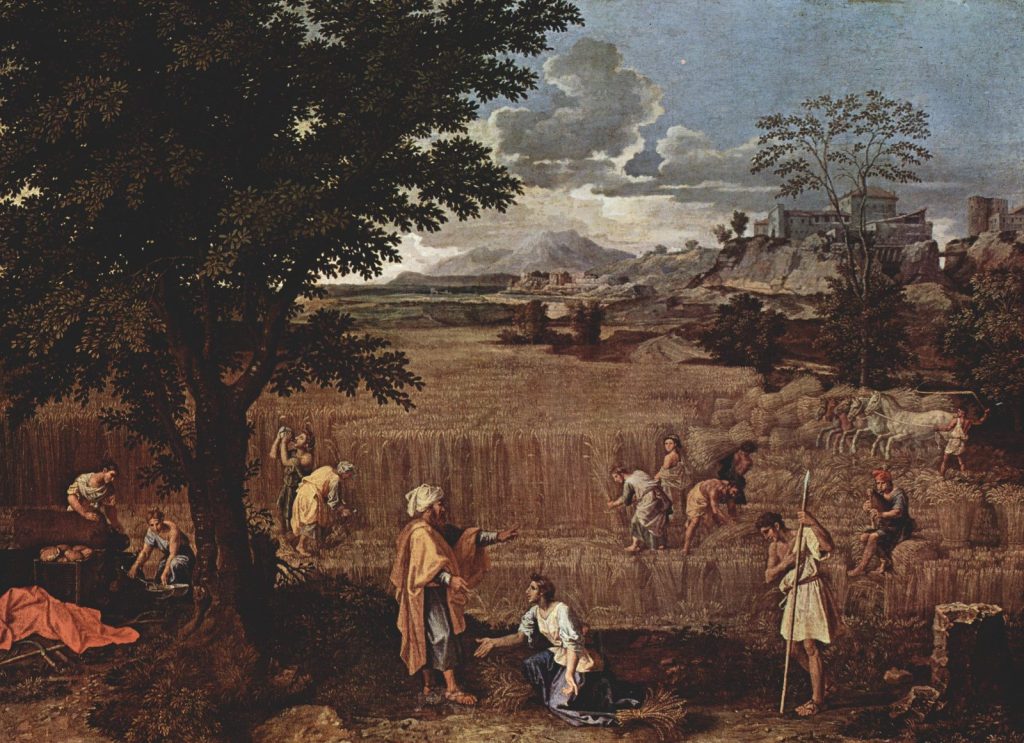
Featured image: Nicolas Poussin, Summer (Ruth and Boaz), 1660–1664. Musée du Louvre, Paris. Public domain, via Wikimedia Commons. The images inside this article are credited beneath each one.