Hi friends, Raymond here.
The mid-year report from Leket Israel just landed in my inbox, and I want to share it with you. If you have given to this work, or prayed for it, this report is yours too.
The season this harvest grew in
You know what these six months held for Israel. The year opened quietly enough, after more than two years of war. Then, on February 28, war broke out with Iran. A ceasefire came on April 8 but missiles kept falling in the north well into the summer. By July 1, Leket could finally say its operations were back to routine.
The shaded stretches mark the war with Iran and the months of continued hostilities in the north.
Every number below happened inside that window.
What Leket did from January to June
People fed every week
through 346 partner charities
Produce rescued
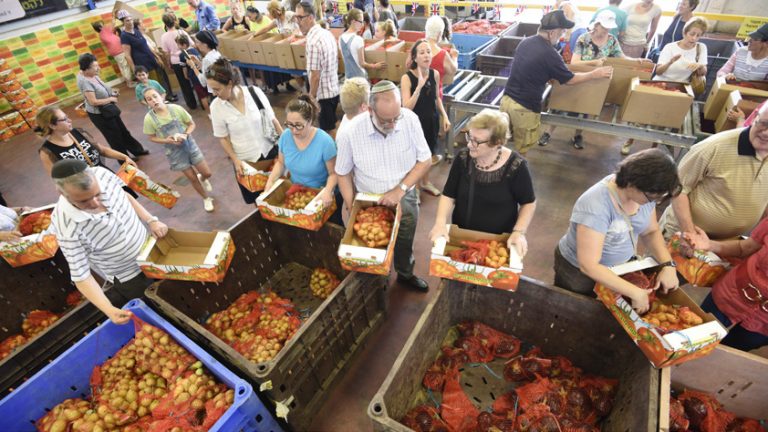
56 crops from 488 farms & packing houses
Cooked meals rescued
from 90 corporate cafeterias & IDF bases
Servings of soup & vegetable dishes
Volunteers mobilized
Nutrition workshops
in 50 municipalities
Week in, week out, 346 partner charities kept food moving to 470,000 Israelis in need.
The produce came from 488 farms and packing houses: 15,584 metric tons of it (over 34 million pounds), across 56 different crops. More than 1.1 million cooked meals were rescued from corporate cafeterias and IDF bases, meals that would otherwise have gone into the bin. Add 335,566 servings of soup and vegetable dishes, 292 nutrition workshops in 50 municipalities, and 44,606 volunteers to make it all happen.
Assaf came home to his artichokes
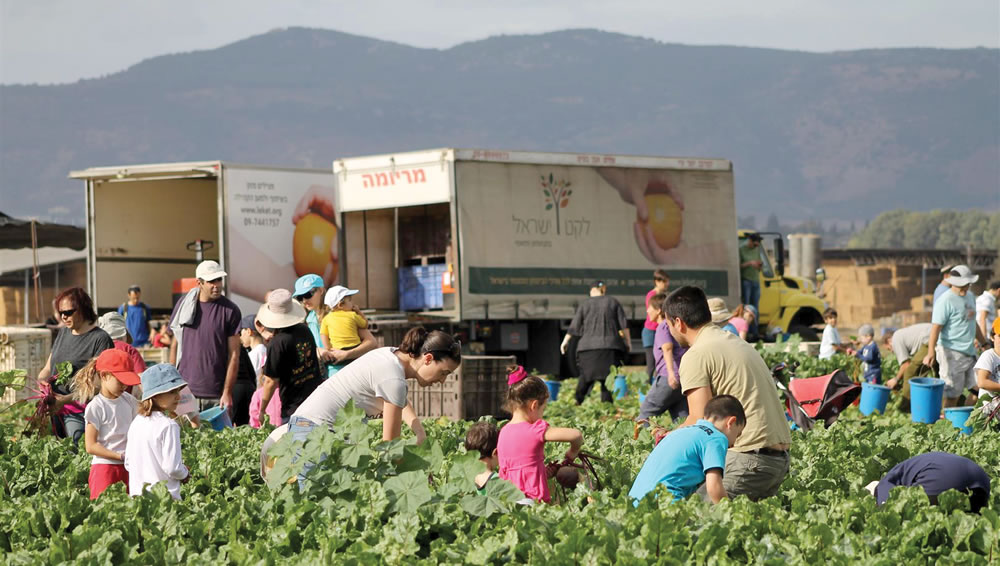
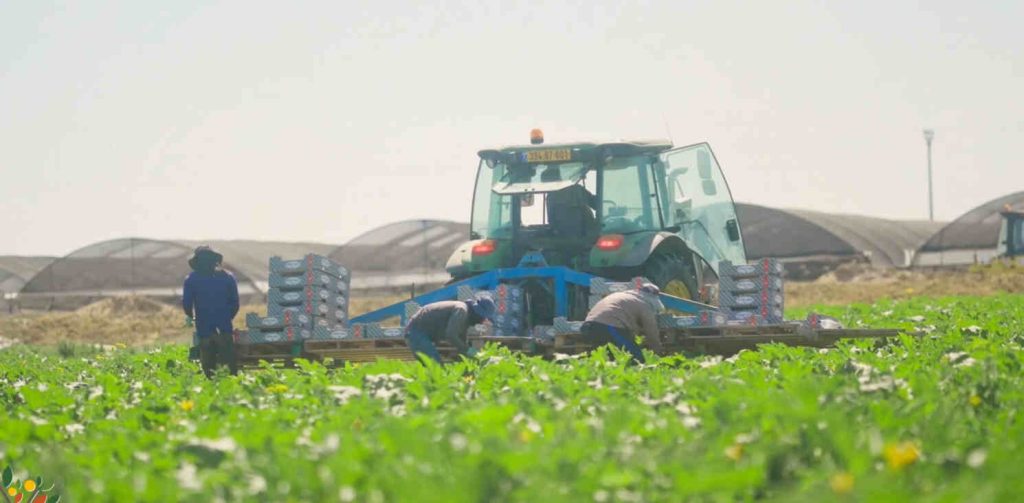
One of those farmers is Assaf, 57, who grows artichokes with his son on Moshav Ram-On in the Gilboa region. A second-generation farmer, he has partnered with Leket for years.
Assaf just completed nearly 600 days of reserve duty. Six hundred days. When he finally came home, he went straight back to his fields. He gave his surplus to Leket Israel, who distributed it to families who cannot afford it.
“Those who sow with tears will reap with songs of joy.”Psalm 126:5
Assaf sowed through two years of tears. The harvest is on tables across Israel right now.
The kitchen that would not stay closed
In the north, our long-time partner Chabad of Kiryat Shmona lost its kitchen in 2024, when a missile from Lebanon destroyed the building and its equipment. Support raised through Leket rebuilt it, and the meals kept going out.
Then, during this spring’s war with Iran, the organization’s director was injured in another missile strike. He was back at work shortly afterward, leading the same organization, serving the same community.
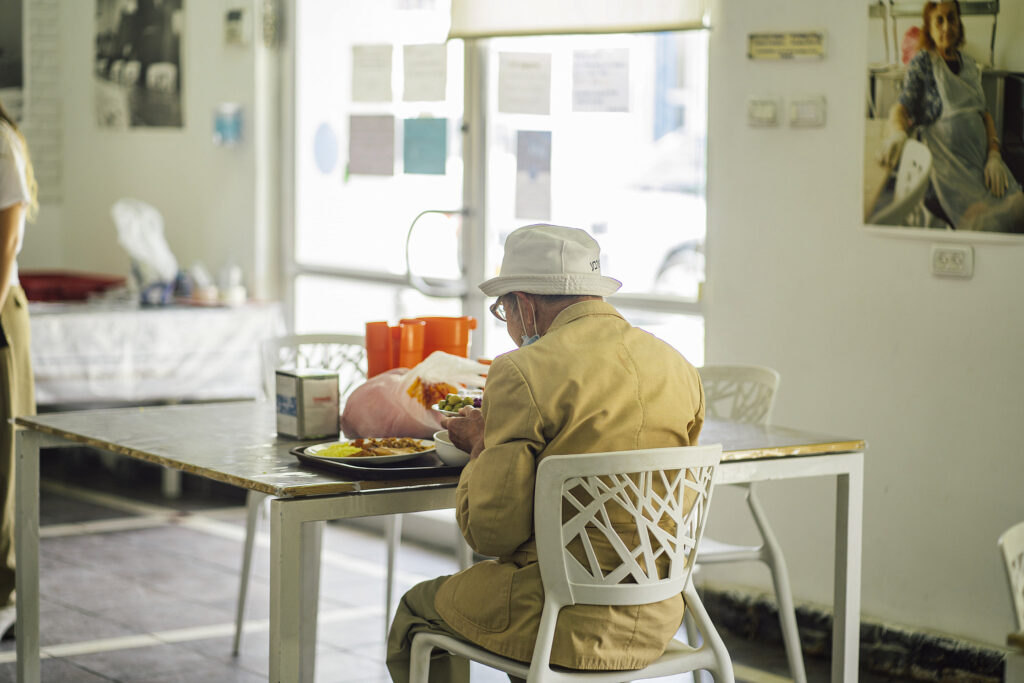
These are the people your giving stands behind.
What a dollar does here
Now, the part of the report I most want you to see as a donor.
Leket’s model is food rescue. The food already exists, growing in a field or cooked in a cafeteria; your gift pays to move it to someone’s table before it goes to waste. That changes the math. In 2024, rescuing and delivering all that food cost $14.6 million. At market prices, the food was worth $63.4 million.
Every dollar, multiplied
Cost of food rescue vs. the market value of the food delivered · Leket Israel FY 2024 audit · US$
See the numbers
| Market value of produce rescued | $44,077,297 |
| Market value of meals rescued | $19,327,838 |
| Total market value delivered | $63,405,135 |
| Total cost of produce & meal rescue | $14,616,900 |
About $4.30 of food for every rescue dollar, in a war year when Leket had to purchase far more food than usual.
In 2026, it costs about 20 cents to rescue and deliver a pound of fresh produce, and $1.61 for a full cooked meal. Set against what that food is worth, produce rescue returns about five dollars of food for every dollar donated, and meal rescue about six.
Produce rescue
food value returned per dollar
Meal rescue
food value returned per dollar
Counting health & environment too
total value per $1, National Food Waste & Rescue Report (BDO)
And that only counts the food. Israel’s National Food Waste and Rescue Report, prepared with BDO, also counts the healthcare costs of hunger, the farmland and water saved, and the methane that never leaves a landfill. On that fuller accounting, every dollar invested in food rescue generates an estimated $10.70 in value. Food insecurity costs Israel’s health system alone some $1.57 billion a year.
Rescuing food is five to six times more cost-effective than buying the same help outright. Few places put a charitable dollar to work this hard.
Thank you
Between January and June, your giving kept 346 charities supplied and put over a million rescued meals on tables. It stood behind farmers like Assaf while they served their country.
If you would like to be part of the second half of 2026, you can give here:
Shalom,
Raymond MacDonald
Christian Friends of Leket Israel
Figures from Leket Israel’s Mid-Year Report, January 1 – June 30, 2026. Monetary values from Leket’s FY 2024 audit, at US$1 = NIS 3.7.