
Where does the Christmas story begin?
Ask most Christians and they’ll say Bethlehem. Many would go further and say Christmas is where Christianity itself began, a new faith with a new story, standing apart from the Judaism that came before it.
That idea runs deeper than we’d like to admit. In a 2025 survey of 2,000 British Christians, only about half said Jesus was Jewish, and nearly a third said they didn’t know. In America, a 2021 survey of more than 1,000 evangelicals found that more than one in four reject the idea that the Jewish people were ever God’s chosen people.
So let’s look at where Luke actually starts. The first place in his account is Jerusalem, and more specifically, the Temple.
"There was in the days of Herod, the king of Judea, a certain priest named Zacharias, of the division of Abijah. His wife was of the daughters of Aaron, and her name was Elizabeth."
Luke 1:5 NKJV
Most of us read right past that line. A Jewish listener never would have. Notice what Luke has put in front of us before Mary, Joseph or Bethlehem even appear: a priest, a priestly family, the Temple and the Law of Moses. To see just how Jewish this opening is, we have to go back to the book of 1 Chronicles.
David's twenty-four divisions
1 Chronicles 24 lists the priestly families that came from Aaron’s two surviving sons, Eleazar and Ithamar. Eleazar’s line gave sixteen heads of families and Ithamar’s gave eight, twenty-four in all.
King David organized the priests’ duties by these families. He worked with Zadok, of Eleazar’s line, and Ahimelech, of Ithamar’s, and they set the order by casting lots, so that no family was favored over another.
"Thus they were divided by lot, one group as another."
1 Chronicles 24:5 NKJV
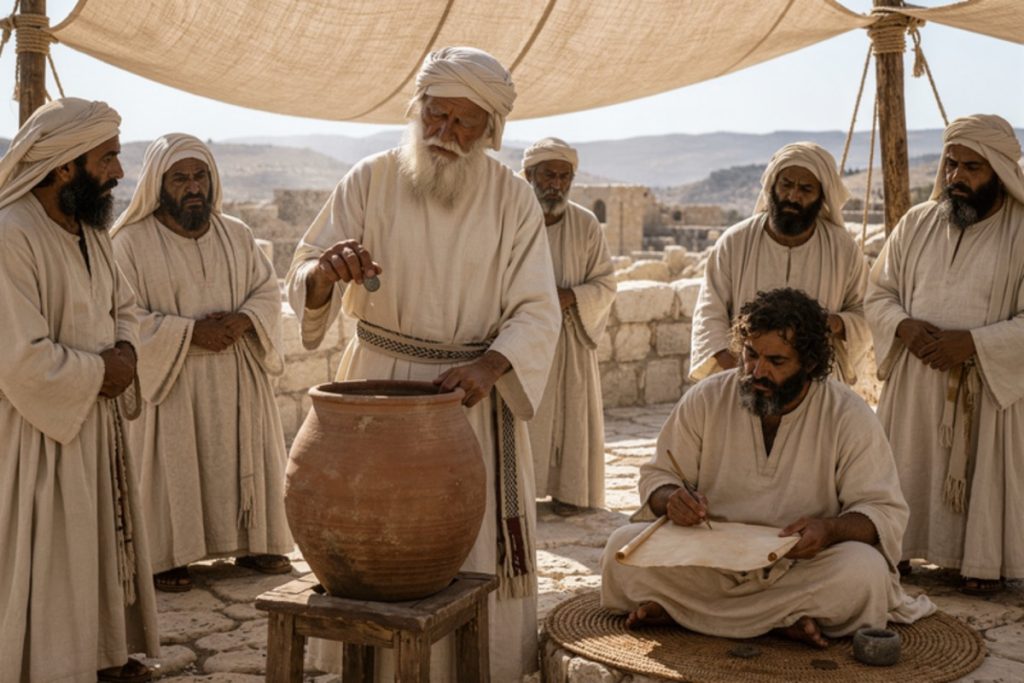
The eighth lot fell to Abijah. The Bible doesn’t tell us whether Abijah came from Eleazar or Ithamar. What it does tell us is that a thousand years later, Luke could name Zacharias’s division and every Jewish reader knew exactly what he meant.
More priests than jobs
Israel had more priests and Levites than there were jobs to go around, so they served in shifts. Each of the twenty-four divisions went up to Jerusalem for one week at a time, about twice a year, and all of them served together at the great pilgrim feasts. While on duty the priests stayed at the Temple. When the week was over they went home, just as Zacharias did.
"So it was, as soon as the days of his service were completed, that he departed to his own house."
Luke 1:23 NKJV
The daily service kept dozens of priests and Levites busy, with many more at work across the Temple complex. The most important daily tasks were clearing the ashes from the altar, preparing the animals for the offering and bringing them to the altar, preparing the oil and wicks for the menorah, and preparing the golden altar for the incense.
The Levites had their own work. They kept watch through the night at twenty-one posts around the Temple. Gatekeepers supervised who came in. Singers and musicians accompanied the offerings. Other Levites cared for the vessels, the priestly garments, the oil, the wine and the wood.
The morning lot
The Temple’s day began at sunrise, and every job was given out by lot, including who would offer the incense. According to the Mishnah, the lot for the incense was open only to a priest who had never offered it before. A man could hope for that honor once in his life, and many never received it at all.
The incense offering
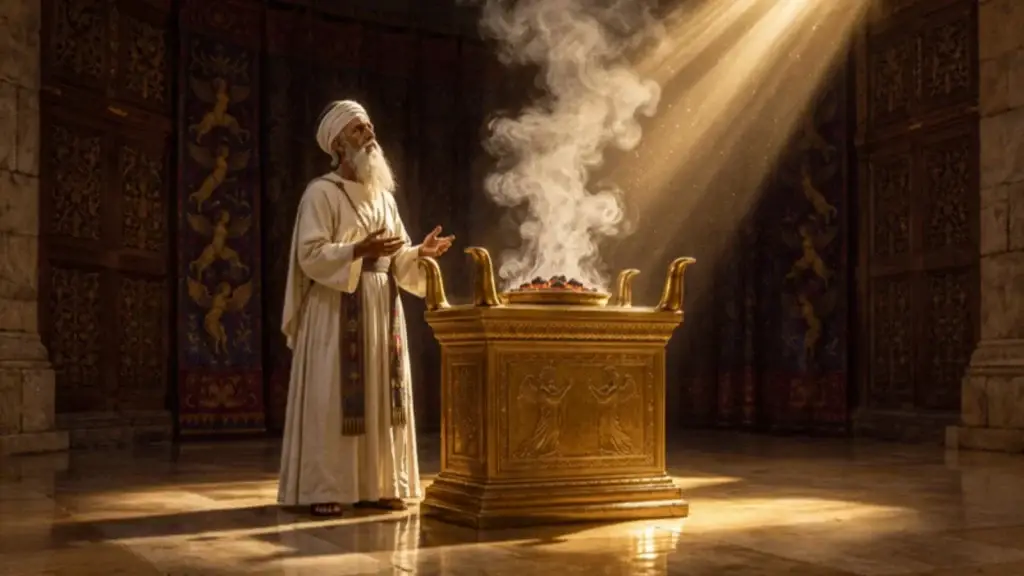
The priest chosen for the fire pan carried coals from the great altar into the Holy Place. He heaped them on the golden altar, spread them out, bowed to the ground and went out. Another priest helped prepare the incense and then left as well. Then the priest chosen to offer the incense stood alone before the altar and offered it.
"And the whole multitude of the people was praying outside at the hour of incense. Then an angel of the Lord appeared to him, standing on the right side of the altar of incense."
Luke 1:10-11 NKJV
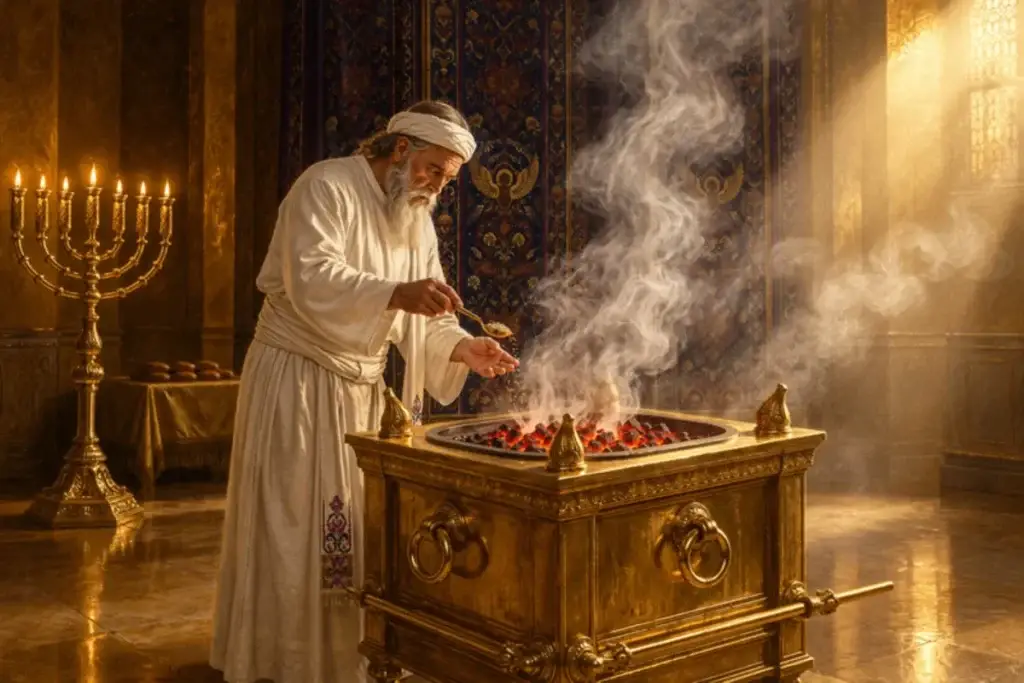
Zacharias had gone in alone. He was not alone now.
"And when Zacharias saw him, he was troubled, and fear fell upon him. But the angel said to him, 'Do not be afraid, Zacharias, for your prayer is heard; and your wife Elizabeth will bear you a son, and you shall call his name John. And you will have joy and gladness, and many will rejoice at his birth.'"
Luke 1:12-14 NKJV
Christmas did not start a new religion
Now, there is a theology that says the coming of Jesus was the moment God finished with the Jewish people and started again with the Church. It is called Replacement Theology, and it treats Christmas as the day a new religion was born.
Luke tells it differently. Look at everything in this one scene: a priest descended from Aaron, a division set up by King David, the Temple in Jerusalem, the incense commanded in the Law of Moses, and the people of Israel praying in the courts outside. God didn’t step outside Judaism to begin the story of His Son. He stepped into the Holy Place.
If God were finished with Israel, why would He begin the Gospel inside Israel’s Temple, through Israel’s priesthood, in answer to Israel’s prayers?
Even the names in this house tell us. Zacharias means “the LORD remembers.” Elizabeth means “my God is an oath.” When Zacharias finally sang, he said it plainly,
"To perform the mercy promised to our fathers
And to remember His holy covenant,
The oath which He swore to our father Abraham"Luke 1:72-73 NKJV
God remembered His oath to Israel then. He still does.
Luke begins and ends in the Temple
Here’s something easy to miss. Luke opens his Gospel with Zacharias burning incense in the Temple, and he closes it in the same place. After Jesus ascended, His disciples “returned to Jerusalem with great joy, and were continually in the temple praising and blessing God” (Luke 24:52-53).
Jesus never treated the Temple as something He had come to replace. Watch what He does with a leper.
"Now a leper came to Him, imploring Him, kneeling down to Him and saying to Him, 'If You are willing, You can make me clean.' Then Jesus, moved with compassion, stretched out His hand and touched him, and said to him, 'I am willing; be cleansed.'"
Mark 1:40-41 NKJV
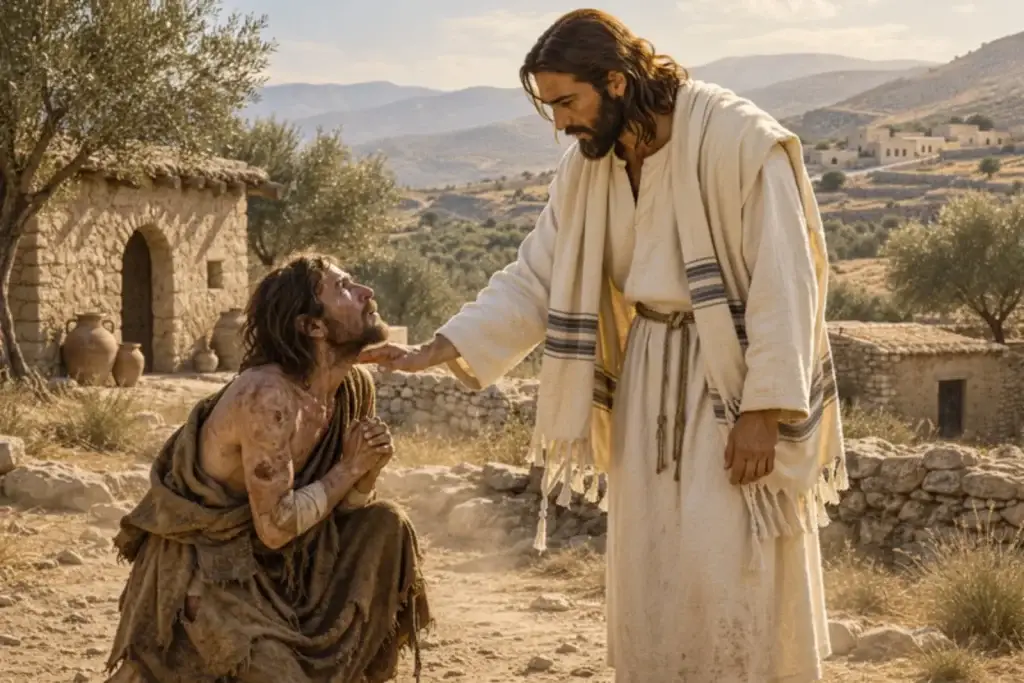
Notice He doesn’t say “Be healed.” He says “Be cleansed.” Leprosy (tzara’at in Hebrew) did more than make a man sick. It made him unclean and cut him off from his family and from worship. So Jesus sends him straight to the priest.
"See that you say nothing to anyone; but go your way, show yourself to the priest, and offer for your cleansing those things which Moses commanded, as a testimony to them."
Mark 1:44 NKJV
Leviticus 14 lays out the cleansing. According to the Mishnah, the healed man stood at the Nicanor Gate on the east side of the inner courts, and he laid his hands on the head of his offering. The priest then put some of its blood on the man’s right ear, right thumb and right big toe (Leviticus 14:14). After that he was home: back with his people, back at the feasts and back in the house of God.
After the resurrection
You’d think the resurrection would be the moment Jesus’ followers walked away from the Temple. They didn’t. For the first five chapters of Acts, the Temple is where you find them.
"So continuing daily with one accord in the temple, and breaking bread from house to house, they ate their food with gladness and simplicity of heart..."
Acts 2:46 NKJV
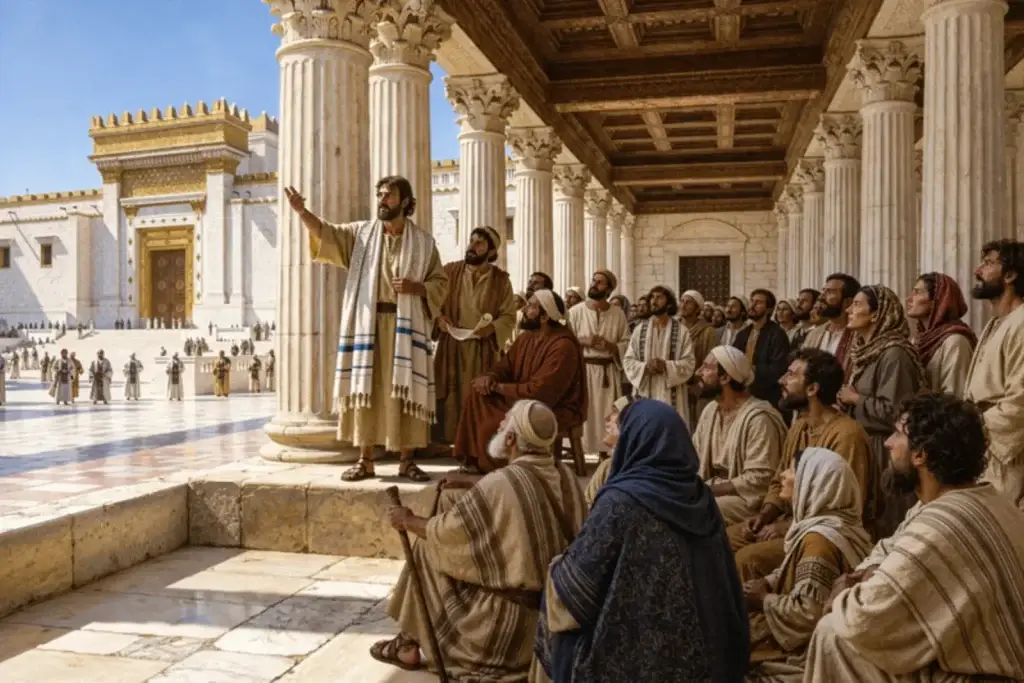
Peter and John went up “to the temple at the hour of prayer” (Acts 3:1). The believers gathered in Solomon’s Porch (Acts 5:12). When an angel let the apostles out of prison, he told them, “Go, stand in the temple and speak to the people all the words of this life” (Acts 5:20).
Pentecost wasn’t a new holiday either. Shavuot, the Feast of Weeks, was one of the three pilgrim feasts when every Jewish man was commanded to appear before the Lord in Jerusalem (Deuteronomy 16:16). That’s why the city was full of “Jews, devout men, from every nation under heaven” (Acts 2:5). When the Spirit fell, they were amazed: “And how is it that we hear, each in our own language in which we were born?” (Acts 2:8).
Where would a crowd that size gather during the feast? You guessed it! Many scholars believe the “house” in Acts 2:2 was the Temple itself. Either way, the church was born at a Jewish feast in Jerusalem, a short walk from the altar where Zacharias burned incense.
Christmas didn’t start a new religion. Neither did Easter, and neither did Pentecost.
The apostle to the Gentiles, in the Temple
But surely Paul left all this behind?
"So Paul still remained a good while. Then he took leave of the brethren and sailed for Syria, and Priscilla and Aquila were with him. He had his hair cut off at Cenchrea, for he had taken a vow."
Acts 18:18 NKJV
A vow and a haircut take us to Numbers 6, the vow of the Nazirite: “All the days of the vow of his separation no razor shall come upon his head” (Numbers 6:5). Scholars still debate whether Cenchrea marked the start or the end of Paul’s vow. Either way, it was a Jewish vow kept by a Jewish man.
When Paul reached Jerusalem, trouble was waiting. James and the elders told him that thousands of Jewish believers, “all zealous for the law” (Acts 21:20), had heard something about him.
"...they have been informed about you that you teach all the Jews who are among the Gentiles to forsake Moses, saying that they ought not to circumcise their children nor to walk according to the customs."
Acts 21:21 NKJV
The rumor was that Paul had abandoned the faith of his fathers and was teaching Jews everywhere to do the same. It wasn’t true. Paul did teach, all through his letters, that Gentiles didn’t need to be circumcised or take on the whole Torah to belong to God. Through faith in Jesus, a Gentile could come into God’s family as a Gentile. He never told Jews to stop being Jews.
So James gave Paul a way to settle it.
"Therefore do what we tell you: We have four men who have taken a vow. Take them and be purified with them, and pay their expenses so that they may shave their heads, and that all may know that those things of which they were informed concerning you are nothing, but that you yourself also walk orderly and keep the law."
Acts 21:23-24 NKJV
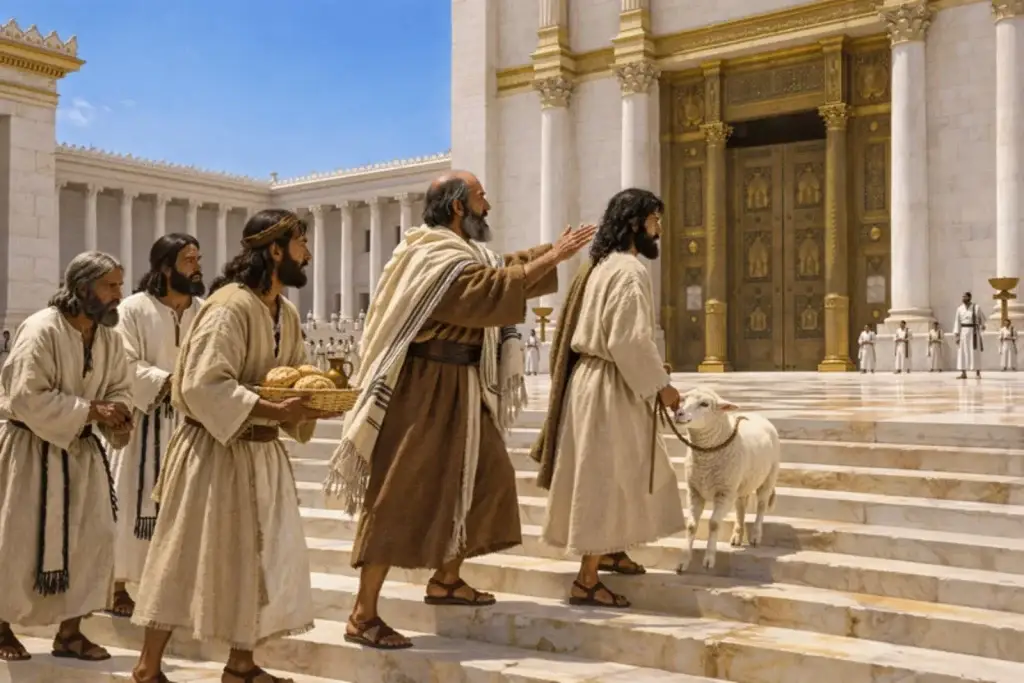
That was no small gift. Here’s what each Nazirite had to bring.
"...one male lamb in its first year without blemish as a burnt offering, one ewe lamb in its first year without blemish as a sin offering, one ram without blemish as a peace offering, a basket of unleavened bread, cakes of fine flour mixed with oil, unleavened wafers anointed with oil, and their grain offering with their drink offerings."
Numbers 6:14-15 NKJV
Multiply that by four. Then, at the door of the sanctuary, each man shaved his head and put his hair “on the fire which is under the sacrifice of the peace offering” (Numbers 6:18).
Paul said yes.
"Then Paul took the men, and the next day, having been purified with them, entered the temple to announce the expiration of the days of purification, at which time an offering should be made for each one of them."
Acts 21:26 NKJV
Yes, you read that right! Paul, the apostle to the Gentiles, years after the Damascus road, walked into the Temple to arrange sacrifices. He was arrested before the week was out, but he later told the governor Felix why he had come to Jerusalem: “to bring alms and offerings to my nation” (Acts 24:17).
James made the other half just as clear. Gentiles could stay Gentiles. He repeated what the Jerusalem Council had decided in Acts 15.
"But concerning the Gentiles who believe, we have written and decided that they should observe no such thing, except that they should keep themselves from things offered to idols, from blood, from things strangled, and from sexual immorality."
Acts 21:25 NKJV
Soon after, Paul stood before the Sanhedrin and said, “Men and brethren, I am a Pharisee, the son of a Pharisee” (Acts 23:6). He said “I am,” not “I was.” The scribes of the Pharisees’ party answered, “We find no evil in this man” (Acts 23:9). Neither Paul nor those Pharisees saw any conflict between being a Pharisee and believing that Jesus is Israel’s Messiah.
Spiritualizing the Temple
Now we can see what replacement theology does with all of this. It takes something physical and makes it “spiritual,” then says the spiritual version has replaced the real one. It’s no longer Israel, it’s the church. It’s no longer the Temple, we are the temple.
That idea showed up early. In the second century, Justin Martyr told a Jewish man named Trypho that Christians were “the true spiritual Israel.” The Epistle of Barnabas said the Jews had been wrong to put their hope in the building at all. Israel’s land, Israel’s Temple and Israel’s people were all turned into pictures of the church. Once that happened, it was a short step to treating the real people as if they no longer mattered.
Paul did write that believers are the temple of God (1 Corinthians 3:16), and he meant it. But a few years after writing those words, the same Paul went up to the Temple in Jerusalem with four Nazirites and paid for their offerings. He saw no contradiction. God dwelling in His people didn’t cancel God’s house on Mount Zion, any more than grafting in the Gentiles cancelled Israel. Paul warned Gentile believers about exactly this kind of pride, as we’ll see in a moment. Looking back at church history, we haven’t always listened.
What this means for us
So where does that leave Christians? Not outside the story, and not standing over it. Paul tells Gentile believers what we were before Christ, and what we are now,
"that at that time you were without Christ, being aliens from the commonwealth of Israel and strangers from the covenants of promise... But now in Christ Jesus you who once were far off have been brought near by the blood of Christ."
Ephesians 2:12-13 NKJV
We weren’t given a new story. We were brought near to Israel’s. And Paul warns us how to carry that,
"do not boast against the branches. But if you do boast, remember that you do not support the root, but the root supports you."
Romans 11:18 NKJV
We looked at Paul’s picture of the root and the branches in Don’t Boast Against the Root.
This Christmas, when you read Luke 1, remember where your faith was born: in the Temple, among the Jewish people, through a God who keeps His promises to them.

Won’t you join me? Join the Jews and Christians who together look forward to the Temple Ezekiel describes so vividly in chapters 40 to 48. The Lord has a plan for Israel, and He is working it out in our lifetime. He doesn’t want Christians standing on the sidelines. After centuries of animosity, He wants Jews and Christians together in the restoration of Israel, looking toward the future Temple and the coming of Israel’s Messiah, our Savior!
Coming next
An old priest’s wife was going to have a baby, long after anyone thought it possible. But Elizabeth wasn’t the only one. Six months later, the same angel would be sent to someone new, a young woman in a small town in Galilee. She too was about to give birth to a child.
Next time, we’ll meet her.
Shalom,
Raymond MacDonald
Christian Friends of Leket Israel
Temple practice is from the Mishnah (Tamid 3:1, 5:2 and 6:2-3, Middot 1:1, Negaim 14:8). The British survey of 2,000 Christians was conducted by Motti Inbari and Kirill Bumin and reported in Premier Christianity on March 14, 2025. The American survey of more than 1,000 evangelicals was conducted by Infinity Concepts and Grey Matter and reported in The Jerusalem Post on December 2, 2021. The early church quotations are from Justin Martyr, Dialogue with Trypho 11, and the Epistle of Barnabas 16. All verses NKJV. The pictures are illustrations.